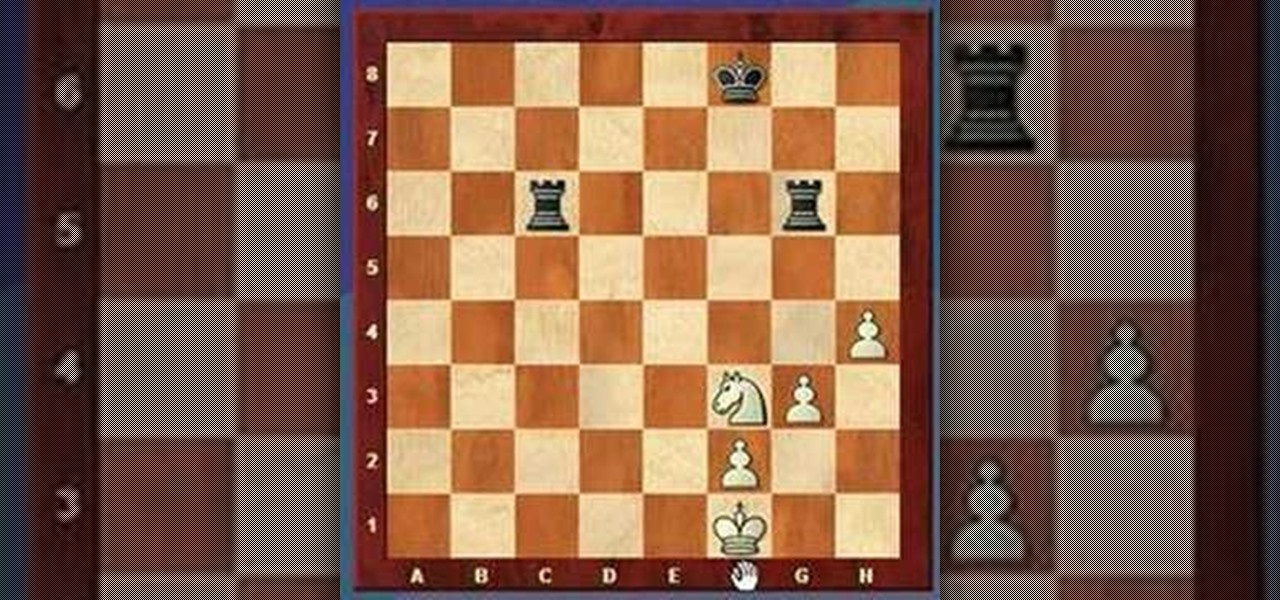
In chess, a fork is a tactic in which a piece attacks multiple enemy pieces simultaneously. The attacker usually aims to capture one of the forked pieces. The defender often cannot counter every threat. A fork is most effective when it is forcing, such as when the king is put in check. A fork is a type of double attack.
Terminology
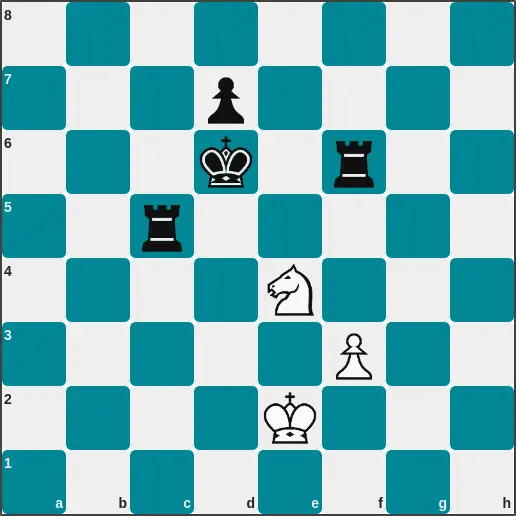
A fork is an example of a double attack. The type of fork is named after the type of forking piece. For example, a fork by a knight is a knight fork. The attacked pieces are forked. If the king is one of the attacked pieces, the term absolute fork is sometimes used, while a fork not involving the enemy king is a relative fork.
A fork of the king and queen, the highest material-gaining fork possible, is sometimes called a royal fork. A fork of the enemy king, queen, and one (or both) rooks is sometimes called a grand fork. A knight fork of the enemy king, queen, and possibly other pieces is sometimes called a family fork or family check.
Strategy
While any piece can deliver a fork, knights are particularly effective at creating forks because they cannot be captured by the pieces they attack, and as a minor piece they are less valuable than rooks and queens.
Compared to forks by other pieces, a queen fork requires more specific conditions to be helpful due to the queen's higher value. However, a queen fork can often lead to material or positional gain when the forked pieces are undefended, poorly coordinated, or when one piece is the king.
Game examples
This example is from the first round of the FIDE World Chess Championship 2004 between Mohamed Tissir and Alexey Dreev. After
- 33... Nf2 34. Kg1 Nd3
White resigned. In the final position the black knight forks White's queen and rook; after the queen moves away, Black will win the exchange.
This example is from the ninth round of the Clarin GP Final between Guillermo Soppe and Fernando Braga. After
- 40... Qh1
White resigned. The only move is 41.Ke2 which enables a royal fork with 41...Nc3 , winning the queen.
In the Two Knights Defense (1.e4 e5 2.Nf3 Nc6 3.Bc4 Nf6) after 4.Nc3, Black can eliminate White's e4-pawn immediately with
- 4... Nxe4!
due to the fork trick
- 5. Nxe4 d5
regaining either the bishop or the knight.
References
.png)
:max_bytes(150000):strip_icc()/Forks_1-e9dd359707024d21a2a3c4d99fbb296d.png)
